
Pneumatic Check Valves: Function and Selection
A pneumatic check valve lets compressed air flow in one direction only and blocks the reverse. It secures cylinders against creeping, protects lines during pressure loss and separates circuits from each other. This guide walks through function, key figures and the right design step by step.
View check valvesHow does a pneumatic check valve work?
A check valve opens in the flow direction once the inlet pressure exceeds the cracking pressure, and closes on its own when flow drops or reverses. A spring-loaded poppet or a sealing disc then presses against the seat and blocks the reverse direction tightly. This keeps compressed air where it is needed, for example to hold a cylinder in position.
- Flow direction: opens once the cracking pressure is exceeded.
- Blocking direction: a tight seat prevents back flow.
- Spring types need some cracking pressure, spring-less types almost none.
- The arrow on the body always shows the flow direction.
Which key figures decide the selection?
Sizing turns on cracking pressure, flow value and port size. Too high a cracking pressure wastes usable pressure, too small a flow throttles the cylinder. Also check working pressure, temperature range and the media compatibility of the seal, especially with oily compressed air.
Which designs exist and when do I use them?
Besides the plain check valve there are pilot-operated variants and combinations with a flow restrictor. The pilot-operated version holds a cylinder safely in place and releases it only with a pilot pressure. The flow-control check valve sets the piston speed through the exhaust air.
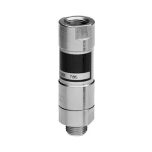 Plain check valve
Blocks one direction, ideal to separate circuits and as a back-flow safeguard.
View products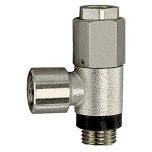
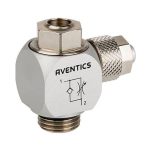 Flow-control check valve
Sets the piston speed through throttled exhaust air.
Frequently asked questions
Why does a pneumatic cylinder need a check valve?
It holds the pressure on one piston side when the supply drops, securing the position against unintended creeping. For load-safe holding a pilot-operated variant is used, which releases only with a pilot pressure.
What does cracking pressure mean on a check valve?
It is the minimum pressure at which the valve opens in the flow direction. Spring-loaded valves typically need 0.2 to 0.5 bar, spring-less ones open almost without resistance. A high cracking pressure reduces the usable working pressure.
Can I mount a check valve in any orientation?
Pneumatic check valves are mostly position-independent; only the flow direction per the arrow on the body matters. With compressed air carrying condensate, choose an orientation that does not trap moisture in the seat.
Find the right check valve
When choosing, pay attention to cracking pressure, flow and design for your application.
Vetted selection
Recommendations from maker data and field values.
Correct cracking pressure
Key figures matched to the working pressure.
Right design
Plain, pilot-operated or flow-control compared.
Selection help
We help you choose the right products; technical details are clarified with the manufacturer.