
Working Pressure and Flow: bar and l/min
Working pressure and flow decide whether a pneumatic system runs cleanly or loses power. Pressure in bar delivers the force, flow in l/min delivers the volume. Knowing both and matching them prevents pressure drop, sluggish cylinders and stalling tools. This guide explains the basics in practical terms.
To the guidesWhat do working pressure and flow mean?
Working pressure in bar is the force per area the compressed air exerts. It sets how much force a cylinder or tool produces. Flow in l/min (standard litres per minute) is the air volume that passes per unit of time. It sets how fast a cylinder moves and whether a tool holds its speed. Pressure without enough flow collapses under load, flow without pressure delivers no force.
How do I size pressure and air volume correctly?
Demand comes from the consumer's datasheet. Add the air consumption of every tool running at the same time and include an allowance for leakage. The working pressure should sit about 1 bar above the tool's setpoint so the pressure drop across line and service unit is offset.
- Add the air demand of all consumers active at the same time.
- Plan a 20‑30 % allowance for leakage and reserve.
- Set the working pressure about 1 bar above the setpoint.
- Keep line and valve nominal size no smaller than at the consumer.
How do I avoid pressure drop and bottlenecks?
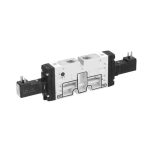
Every restriction costs pressure: thin hoses, undersized couplings and narrow valves throttle the flow. The key figure is the Kv or Cv value, or the rated flow of a valve. As a rule of thumb, keep the pressure drop below 0.3 bar on the path from the network to the tool. Larger nominal sizes and short runs keep force and speed stable.
Frequently asked questions
What matters more, pressure or flow?
Both together. Pressure in bar creates the force, flow in l/min sustains it under load. High pressure is useless if the flow is too small and the tool collapses when loaded.
Why does my tool lose power at full load?
Usually the flow is too low: a thin line, a narrow coupling or an undersized valve throttles the air volume. Check nominal sizes and the valve's Kv value and step up one size.
How much reserve should the working pressure have?
About 1 bar above the tool's setpoint. This reserve offsets the pressure drop in the line, filter and coupling so the required working pressure reaches the tool.
Size pressure and flow correctly
Our guides explain bar, l/min, nominal size and valve selection for your system.
Practical values
Pressure and flow figures from datasheets and field experience.
Correctly sized
Air volume matched to the demand of all consumers.
Stable working pressure
Pressure drop and reserves clearly explained.
Selection help
We help you choose the right products; technical details are clarified with the manufacturer.