
Water Content in Oil and Its Effects
Water is the silent damage driver in every hydraulic system. Even small amounts promote corrosion, additive depletion and cavitation and clearly shorten the life of oil, pumps and valves. This guide shows where the water comes from, what it does and how to measure and reduce the water content.
To the guidesIn which forms does water sit in the oil?
Water appears in three states. Dissolved water is spread molecularly through the oil and stays invisible. Once the saturation limit is passed, emulsified water forms and clouds the oil. As the oil cools further, free water settles at the tank bottom. Free and emulsified water are the most harmful because they attack the lubricating film and components directly.
What damage does water cause?
Water attacks both oil and system on several fronts. It drives corrosion on steel surfaces, speeds up oil oxidation and depletes additives. In pumps, free water causes cavitation and erosion, and the lubricating film breaks down more easily under load. Water also forms the basis for microbial growth and sludge.
- Corrosion and rust on cylinders, pumps and valves.
- Cavitation and erosion from water flashing to vapour in low-pressure zones.
- Faster oil oxidation and loss of key additives.
- Lubricating film breakdown and higher wear on sliding pairs.
- Sludge, deposits and microbial growth in the tank.
How do I measure the water content?
Water content is given in ppm (parts per million) or as a percentage of saturation. In practice a saturation probe that reads the relative humidity directly in the oil is often enough. Precise absolute values come from Karl Fischer titration in the lab. A simple visual test shows cloudiness once free water is present.
How do I keep water out of the system?
The best protection is to stop water getting in at all. Desiccant breather filters, tight covers and correct drum storage prevent condensation. If water is already in the oil, vacuum or absorption dehydration brings the moisture back below the limit.
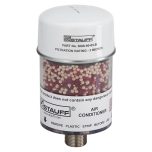
- Fit silica-gel breather filters against inhaled humid air.
- Keep oil temperature below 60 °C to limit condensation.
- Store drums lying down and dry, seal covers tight.
- Run regular oil analysis for water and particles to ISO 4406.
Frequently asked questions
At what water content does it become critical?
A common rule of thumb is a target below 200 ppm for many hydraulic systems. Once free water appears, meaning saturation is exceeded, the risk of damage rises sharply. Sensitive systems demand even lower values.
Where does the water in hydraulic oil come from?
Mostly from humid air breathed in at the tank, from condensation during temperature swings, from leaking coolers or from wet top-up oil. Open drums and poor storage also bring water into the system.
Can I just drain the water off?
Free water at the tank bottom can be partly drained, but dissolved and emulsified water cannot. That needs vacuum or absorption dehydration to bring the moisture back below the limit.
Keep water content under control
Our guides explain measurement, limits and dehydration for long oil service life.
Clear limits
Target values and saturation explained in practice.
Measure right
Probe, Karl Fischer and visual test compared.
Avoid damage
Prevent corrosion, cavitation and ageing.
Selection help
We help you choose the right products; technical details are clarified with the manufacturer.