
Valve Terminals and Manifolds: Selection Guide
A valve terminal groups several pneumatic valves onto a shared manifold with central air and electrical connection. This saves tubing, space and wiring effort compared with scattered single valves. This guide shows when a manifold pays off and how to match body width, flow and connection to your machine.
View valve terminalsWhat is a valve terminal and when does it pay off?
A valve terminal combines several directional valves on one shared manifold. Supply and exhaust air run through central common channels, and control is handled through a shared electrical interface. Instead of tubing and wiring each valve on its own, you only need one supply line and one cable to the terminal. This clearly cuts assembly time, leak points and sources of error.
From roughly four valves on a machine, a manifold usually becomes more economical than single valves. With many actuators in tight space, long runs to the controller or a fieldbus link, the terminal is almost always the better choice. Single valves still make sense when actuators are widely spread or only one or two valves are needed.
Which body size and flow do I need?
Body size follows the air demand of the actuators. Flow is often given as a nominal size or as a flow value in l/min. Sized too small, cylinders move slowly and cycle times rise. Rule of thumb: match the valve flow to piston area, stroke and required cycle time, and keep a reserve. For fast or large cylinders, step up one size.
- Estimate air demand per actuator from piston diameter, stroke and cycle rate.
- Allow for flow loss on long tubing runs from terminal to cylinder.
- Plan 2 to 4 spare stations for later expansion.
- Add vacuum or special functions as their own valve type on the terminal.
How do I link the terminal to the controller?
There are three ways to control the terminal: individual wires, a multi-pin common interface, or a fieldbus or IO-Link node. Multi-pin bundles all valves into one connector and suits small to mid-size terminals. A fieldbus cuts the wiring to a single bus cable and provides per-valve diagnostics, ideal for many valves and decentralised control.
All valves in one common connector, simple and robust for small terminals.
Compare valves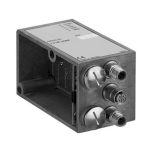 Fieldbus & IO-Link
One bus cable instead of many wires, with per-station diagnostics.
Control overviewAlign protocol, addressing and spare stations with us in advance.
What matters for mounting and operation?
Clean, prepared compressed air protects the valves: a filter holds back particles and condensate so seals and pilots do not stick. Mount the terminal within easy reach so you can swap valves individually during service without undoing the whole tubing. Spare stations and clear labelling make later expansion much easier.
- Filter the compressed air and keep it dry for oil-free valves.
- Fit exhaust silencers without throttling the flow.
- Label valve stations and tubes clearly.
- Use the manual override for commissioning and fault finding.
Frequently asked questions
When does a valve terminal beat single valves?
Usually from about four valves on a machine. Central supply and wiring save assembly time and leak points. With widely spread actuators or only one or two valves, single valves often stay the simpler solution.
Can I expand a valve terminal later?
Yes, many terminals are modular and accept further valve stations. Plan two to four spare stations from the start, so there is enough supply reserve and you do not have to replace the manifold later.
What is the benefit of a fieldbus link?
A fieldbus reduces the wiring to a single bus cable and often provides per-station diagnostics. That speeds up fault finding and suits terminals with many valves or decentralised control.
Find the right valve terminal
When choosing, pay attention to body size, flow and connection for your valve terminal.
Vetted selection
Recommendations from maker data and field values.
Correct flow
Body size matched to the actuators' air demand.
Clear connection
Multi-pin, fieldbus and IO-Link explained plainly.
Selection help
We help you choose the right products; technical details are clarified with the manufacturer.