
Sizing venturi vacuum ejectors
A vacuum ejector turns compressed air into vacuum right at the gripping point using the venturi principle. Nozzle size, end pressure and suction volume decide whether a workpiece is held safely and fast or slips off. This guide walks through how to match ejector, suction cup and air consumption step by step.
View vacuum technologyHow does a venturi ejector work?
Inside the ejector, compressed air flows through a narrow motive nozzle and accelerates to high speed. Downstream of the nozzle a low pressure forms in the mixing chamber, which entrains air from the suction circuit and expels it through the diffuser. There are no moving parts, so the ejector is low-maintenance and responds in milliseconds. The key sizing values are the maximum end pressure (vacuum level) and the suction volume at your working pressure.
How do I calculate suction rate and holding force?
Theoretical holding force equals vacuum level times effective suction area. Always apply a safety factor of at least 2:1 for a static load and 3:1 for a moving load to cover acceleration, friction and leakage. For porous workpieces such as cardboard or foam the air demand rises sharply, so suction volume matters more than maximum end pressure here.
- Record workpiece weight, surface and tightness as the starting point.
- Holding force = vacuum (kPa) x suction area (cm2) / 10, then divide by the safety factor.
- Choose cup count and diameter so the remaining force carries the load safely.
- For a moving load, add horizontal acceleration as an extra force.
- Keep line length short; every metre of tubing lengthens the evacuation time.
How do I cut compressed-air consumption?
Ejectors use compressed air only while running. An ejector with an air-saving function measures the vacuum and switches off the motive air once the setpoint is reached. On tight workpieces a check valve holds the vacuum so the ejector only tops up. On sustained grips this saves most of the energy and lowers noise and heat.
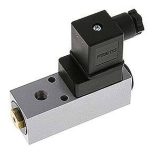
Cuts motive air once setpoint vacuum is reached, ideal for tight parts.
Compare ejectorsA short pressure burst releases the workpiece fast and cleanly from the cup.
Frequently asked questions
Single-stage or multi-stage vacuum ejector - which is better?
Single-stage ejectors build high vacuum quickly at low air use and suit tight, smooth workpieces. Multi-stage ejectors deliver more suction volume and hold porous or slightly leaky parts better, but need more compressed air.
Why does my ejector not reach the stated end pressure?
Usually it is leakage in the suction circuit, a dirty motive nozzle or too low a supply pressure. Check cups and seals, clean the nozzle and set the supply pressure to the value the maker states, typically around 6 bar.
How many suction cups do I need for a workpiece?
Divide the weight by the holding force of one cup at your working vacuum, then multiply by a safety factor of 2 to 3. Spread the cups evenly so load and tilting moments are supported reliably.
Size the right vacuum ejector
When choosing, pay attention to end pressure, suction volume and cup selection for your handling task.
Vetted sizing
Recommendations from maker data and field values.
Safe holding force
Safety factor and suction area clearly calculated.
Energy efficient
Air-saving functions cut compressed-air use.
Selection help
We help you choose the right products; technical details are clarified with the manufacturer.