
Pneumatic Tubing: Material and Diameter Sizing
Pneumatic tubing must match the valve, fitting and medium: material, outer diameter and inner diameter decide flow, pressure loss and service life. Undersized or wrongly chosen tubing throttles the cylinder and makes the control sluggish. This guide walks step by step through sizing material and diameter correctly.
View pneumatic valvesWhich tubing material fits my application?
The material sets flexibility, chemical and temperature resistance. Polyurethane (PU) is kink-resistant, abrasion-proof and the first choice for most controls. Polyamide (PA) handles higher pressure and temperature and suits fixed piping. PE is cheap and light but less pressure-rated. For oil, coolant or hot zones always check the maker's media and temperature approval.
Outer or inner diameter which measure matters?
With push-in fittings, tubing is defined by its outer diameter (OD), typically 4, 6, 8 or 10 mm, because it must fit the valve's push-in port. The inner diameter (ID) instead sets the flow and therefore the piston speed. At 6 mm OD the ID is around 4 mm depending on wall thickness. For fast or large cylinders, step up one size.
- Check the valve's port size first, then choose the matching outer diameter.
- For fast cylinder strokes choose a larger inner diameter to avoid pressure loss.
- On long lines (over 2 to 3 m) step up one nominal size.
How do I check working pressure, temperature and routing?
Working pressure and temperature must be viewed together: the allowable pressure drops as temperature rises. Keep a safety reserve to the burst pressure and respect the minimum bend radius so the tube does not kink and throttle flow. Clean, short runs cut pressure loss and switching times.
Stay within working pressure and keep a safety reserve to burst pressure.
Compare valves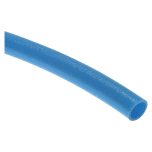 Bend radius
Respect the minimum bend radius or the tube will kink.
Frequently asked questions
Is pneumatic tubing ordered by outer or inner diameter?
With push-in fittings the outer diameter counts, because the tube must fit the push-in port. Common sizes are 4, 6, 8 and 10 mm. The inner diameter sets the flow and is considered on top.
Why does my cylinder get slow with thin tubing?
A too-small inner diameter creates pressure loss and throttles the air volume, so the cylinder never reaches its speed. Choose a larger inner diameter or nominal size and shorten long lines.
Which material suits oil or hot environments?
Standard PU tolerates oil and heat only to a limit. For aggressive media or hot zones PA or PTFE are better. Always check the maker's media and temperature approval before use.
Size the right pneumatic tubing
When choosing, pay attention to material, outer and inner diameter matched to your valve and cylinder.
Vetted selection
Recommendations from maker data and field values.
Correct diameter
Outer size to the port, inner size to the flow.
Safety reserve
Working pressure and temperature clearly explained.
Selection help
We help you choose the right products; technical details are clarified with the manufacturer.