
Pressure Switches and Sensors: How to Choose
Pressure switches and pressure sensors both monitor pressure in pneumatics, but they deliver different signals. A pressure switch gives a simple switching signal at a fixed point, while a pressure sensor provides a continuous analog or IO-Link value for the controller. This guide shows when each component fits and what to check when selecting one.
View pressure switchesWhat is the difference between a pressure switch and a sensor?
A pressure switch compares the applied pressure with a set switch point and toggles an output as soon as it is exceeded or dropped below. A pressure sensor measures pressure continuously and outputs a proportional value, for example as 4‑20 mA, 0‑10 V or over IO-Link. Mechanical pressure switches work purely electromechanically, while electronic models combine measurement, display and several freely adjustable switch points in one housing.
Which criteria decide the selection?
First comes the pressure range: the nominal pressure should sit about 25 to 50 percent above the maximum working pressure so that pressure peaks do not overload the sensor. Next follow signal type, accuracy, switching time and the process connection. For dynamic applications, short switching times and high repeatability matter more than absolute measuring accuracy.
- Choose the pressure range with reserve: set nominal pressure above the real maximum.
- Match the signal to the controller: PNP/NPN switching output, analog or IO-Link.
- Compare accuracy and repeatability from the datasheet (usually in % of full scale).
- Check the process connection and thread: G1/4, G1/8 or M5 are common in pneumatics.
- Mind the protection class and media compatibility: filtered, oiled or dry air.
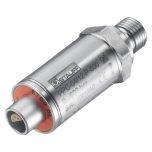 Pressure range
Choose nominal pressure with 25 to 50 percent reserve above working pressure.
To control technology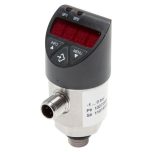 Signal type
Switching output for limits, analog or IO-Link for control and diagnostics.
Valves & controlMatch thread and form factor to the manifold or valve terminal.
How are pressure switches and sensors installed correctly?
The measuring point should sit at a calm spot in the line, not right behind a narrow valve cross-section where turbulence distorts the reading. Electronic sensors need clean, filtered compressed air so that condensate and particles do not damage the diaphragm. Use shielded wiring for analog signals and observe the correct tightening method at the thread.
Frequently asked questions
When is a pressure switch enough and when do I need a sensor?
A pressure switch is enough when only a fixed limit needs monitoring, such as minimum pressure reached yes or no. A pressure sensor is needed as soon as the controller must know, regulate or record the pressure value, or when several switch points must be flexibly adjustable.
What does the accuracy figure in percent of full scale mean?
The figure refers the error to the end of the measuring range, not to the current reading. For a range of 0 to 10 bar, plus minus 1 percent FS means a possible deviation of 0.1 bar across the whole range, even at low pressures.
Why should the nominal pressure be above the working pressure?
Pressure peaks when switching valves can briefly exceed the working pressure significantly. A reserve of 25 to 50 percent in the nominal range prevents these peaks from overloading the diaphragm and shortening the service life.
Find the right pressure switch or sensor
When choosing, pay attention to pressure range, signal type and connection for your application.
Vetted selection
Recommendations from maker data and field values.
Correct range
Pressure range with safety reserve matched to the system.
Right signal
Switching, analog or IO-Link depending on the control.
Selection help
We help you choose the right products; technical details are clarified with the manufacturer.