
Check Valves and Pilot-Operated Check Valves Explained
A check valve lets oil flow in one direction only and seals the reverse direction tightly. A pilot-operated check valve can release that block through a control pressure, holding a load safely in position on the cylinder. This guide walks through function, pilot ratio and selection criteria step by step.
View hydraulic valvesHow does a check valve work?
A check valve is a seat valve that lets oil pass in the flow direction and blocks the reverse direction tightly. A light spring pushes the poppet or ball onto the seat as soon as the pressure drops. Because it is a seat valve and not a spool valve, the leakage in the blocking direction is close to zero, unlike directional valves with spool clearance.
What does a pilot-operated check valve do?
A pilot-operated check valve blocks like a normal check valve but can be opened on demand through a separate pilot port. A pilot piston with a larger area pushes the seat open once enough pressure is present at the pilot port (X). The held oil can then flow back in a controlled way, for example to lower a cylinder. The key benefit is leak-free load holding: with the directional valve in centre position the cylinder stays put without drifting down.
- Load holding on the hydraulic cylinder with no drift at standstill.
- Protection against load drop if a hose or line bursts.
- Controlled lowering by deliberately releasing the block through pilot pressure.
- Available as a single unit or double pilot-operated for both cylinder ports.
Why is the pilot ratio decisive?
The pilot ratio states how much control pressure is needed to open against the applied load pressure. At a ratio of 3:1 about one third of the load pressure at the pilot port is enough. Very high ratios can cause chatter or oscillation under back pressure; a vented (decompression) design with a separate drain line stabilises lowering against high back pressure.
Valve or sandwich plate near the cylinder for safe load holding.
View hydraulic valves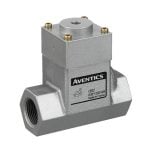 Check back pressure
Under back pressure choose a vented design with its own drain line.
Compare valvesMatch pilot ratio and nominal size to the application.
Frequently asked questions
When do I need a pilot-operated instead of a normal check valve?
Whenever a load must be held leak-free and later moved again in a controlled way, such as with lift cylinders, presses or lift tables. A normal check valve also blocks, but it cannot be reopened on demand.
What does a pilot ratio of 3:1 mean?
It means about one third of the load pressure at the pilot port is enough to open the valve against the load. The larger the ratio, the less pilot pressure is needed, but under back pressure a very large ratio can make lowering uneven.
Why does my cylinder chatter when lowering?
The chatter usually comes from back pressure that makes the valve close and open in turn. A vented design with a separate drain line or a smaller pilot ratio gives smooth, steady lowering.
Find the right check valve
When choosing, pay attention to design, pilot ratio and nominal size for safe load holding.
Low leakage
Seat valves seal almost tight in the reverse direction.
Safe load holding
Protection against load drop if a line bursts.
Correctly sized
Pilot ratio matched to the load.
Selection help
We help you choose the right products; technical details are clarified with the manufacturer.