
Hydraulic Reservoir Sizing and Tank Design
A hydraulic reservoir is more than an oil store: it de-aerates and settles the oil, sheds heat and keeps dirt away from the suction side. An undersized tank overheats and foams, while a badly built one draws air into the pump. This guide walks through sizing the tank and its internal layout step by step.
To the guidesHow big should the hydraulic reservoir be?
The rule of thumb for stationary systems is a tank volume of 3 to 5 times the pump flow per minute. A pump at 40 l/min therefore needs 120 to 200 litres. The large volume gives the oil dwell time so air bubbles rise and heat sheds through the tank walls. On mobile or space-critical units smaller ratios are possible, but then with active cooling.
How do I settle the oil and separate suction from return?
A baffle plate between return and suction forces the oil onto a longer path. That lets air bubbles rise and dirt settle before the oil is drawn in again. Return and suction lines end below the minimum oil level so no oil free-falls and foams. A gap of 50 to 100 mm between the two ends prevents short-circuit flow.
- End the return line below oil level and cut it at an angle to reduce air entrainment.
- Size the suction strainer with ample reserve so no cavitation risk arises.
- Set the baffle to about two thirds of the oil height so oil must flow over and under it.
- Provide a sloped floor and drain plug at the lowest point for condensate and sediment.
Which breather, filters and sensors belong on the tank?
A breather filter balances the level change as cylinders extend and retract, keeping dust and moisture out. A sight glass and temperature gauge belong in clearly visible spots. Return-line or offline filters secure the target cleanliness. A level switch warns of low oil before the pump draws air.
Balances the level change and filters incoming air. Match the rating to the target cleanliness.
View products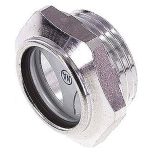 Sight glass & temperature
Mount oil level and temperature readouts in a visible spot for quick checks.
Understand oil temperatureFilters the returning oil and holds the required cleanliness class.
Frequently asked questions
How big should a hydraulic reservoir be relative to the pump?
The rule of thumb is 3 to 5 times the pump flow per minute. At 40 l/min that is 120 to 200 litres. Smaller ratios only work with active oil cooling, otherwise the system overheats.
Why does the oil in my hydraulic tank foam?
Usually the return line ends above the oil level, so oil free-falls and entrains air. Route the return below the minimum level and separate suction and return sides with a baffle plate.
Does the tank need a breather filter?
Yes. As cylinders extend and retract, the oil level changes and the tank breathes. A breather filter keeps dust and moisture out and so protects the oil cleanliness and the components.
Size the right hydraulic reservoir
Our guide covers tank volume, internal layout, breathing and cooling for your system.
Correct size
Tank volume matched to flow and heat rejection.
Clean separation
Baffle and line routing against air and dirt.
Cavitation protection
Suction side and oil level clearly explained.
Selection help
We help you choose the right products; technical details are clarified with the manufacturer.