
Hydraulic Filtration and Filter Beta Ratings
More than 70 percent of hydraulic failures trace back to contaminated oil. The hydraulic filter captures particles before they wear out pumps, valves and cylinders. This guide shows how to match filtration rating, beta ratio and mounting position to your required cleanliness class.
View hydraulic filtersWhat does the beta ratio tell you about a filter?
The beta ratio (β) describes how effectively a filter removes particles of a given size. It is the ratio of particle count upstream to particle count downstream. A β of 200 at 10 µm means that of 200 particles above 10 µm, only one passes the filter. The beta ratio converts to a capture efficiency in percent: β = 1000 equals 99.9 percent.
Which filtration rating does my system need?
The required filtration rating follows the most sensitive component in the circuit. Gear pumps tolerate coarser filters, while servo and proportional valves with tight spool clearances demand very clean fluid. The target cleanliness is stated per ISO 4406 as three code numbers, for example 18/16/13 for particles above 4, 6 and 14 µm.
- Derive the target class from the most sensitive valve, not from the pump.
- The finer the filter, the more filter area you need to avoid early clogging.
- Use oil analysis and a particle counter regularly to verify the cleanliness class.
Where is the filter mounted and what is the bypass for?
The mounting position sets what the filter protects. A pressure filter right after the pump protects sensitive valves, a return filter catches wear debris before it re-enters the tank. Suction filters protect the pump coarsely. A bypass valve opens on a clogged element or cold start and stops the filter from collapsing or the pump from starving.
 Pressure filter
After the pump, protects servo and proportional valves at high fineness.
View products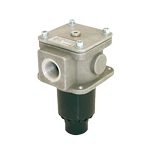
Watch the clogging indicator, swap the element before the bypass opens.
Frequently asked questions
What does a beta ratio of 200 at 10 µm mean?
Of 200 particles above 10 µm upstream, on average only one passes the filter. That equals a capture efficiency of 99.5 percent. Without the particle size the number is not meaningful, which is why it is always written as β10 = 200.
Which ISO 4406 cleanliness class do I need?
It depends on the most sensitive component. Gear pumps manage with 20/18/15, proportional valves need 17/15/12 and servo valves 16/14/11. Choose the filter to match the strictest requirement in the circuit.
When should I change the filter element?
As soon as the clogging indicator trips or the specified differential pressure is reached. Regular oil changes plus particle counting help confirm the interval and prevent follow-on damage to pump and valves.
Find the right hydraulic filter
Find hydraulic filters by rating, beta ratio and mounting position for your required cleanliness class in our shop.
Vetted selection
Recommendations from maker data and ISO cleanliness classes.
Correct beta ratio
Capture efficiency matched to the most sensitive component.
System protection
Mounting position and bypass clearly explained for long life.
Selection help
We help you choose the right products; technical details are clarified with the manufacturer.