
Cylinder mounting types foot flange clevis
The mounting type decides whether a pneumatic cylinder transfers force cleanly or wears out early. Foot, flange and clevis cover fixed and pivoting applications, each with its own strengths and limits. This guide shows when to use which mount and what to watch for on the piston rod, guidance and buckling.
View pneumatic cylindersFixed or pivoting mount - which suits the motion?
Motion direction comes first. If the load acts strictly axial and in a straight line, a fixed mount such as foot or flange fits. If the driven part swings on an arc, the cylinder must pivot with it, so choose an articulated mount such as a clevis or trunnion. A wrong match puts side loads on the piston rod and destroys the seal and bearing.
Foot, flange or clevis - the three basic types compared
The foot mount bolts the cylinder sideways onto a base plate and handles forces across the axis well, but needs a rigid support. The flange sits at the front or rear end face and transfers high axial force on centre, ideal for feed and presses. The clevis (rod eye) allows swinging around a pin and suits levers and flaps.
- Foot needs a flat, torsionally stiff support surface.
- A front flange supports long piston rods better against buckling.
- Always fit a clevis with a matching counter-bearing and pin clearance.
How do I avoid side loads and buckling?
The piston rod takes only tension and compression, no side load. Long strokes raise the buckling risk, so check the bore against stroke length and load. An external guide absorbs side forces and keeps the rod straight. With a swinging load, fit a rod eye at the rod end so no bending moment reaches the rod.
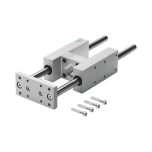
Unsure on force, stroke or mounting? We recheck the sizing for you.
Frequently asked questions
When do I use a foot and when a flange?
The foot suits side mounting and cross-acting forces on a rigid base plate. The flange transfers high axial force on centre and is the better choice for feed and pressing. With a long piston rod, a front flange also supports against buckling.
Why does my piston rod wear out so fast?
Usually side loads act on the rod because a fixed mount was combined with a swinging or off-centre load. Fit a rod eye at the rod end or add an external guide so only tension and compression are transferred.
Are mounts interchangeable between makers?
On standard profile cylinders to ISO 15552 the hole pattern and dimensions match, so foot, flange and clevis for the same bore usually fit. For compact or round cylinders to ISO 6432, compare the datasheets before swapping.
Find the right cylinder mount
Find cylinders by mounting type, bore size and accessories for your application in our shop.
Vetted selection
Recommendations from standards and field values.
Standard pattern
ISO 15552 keeps accessories interchangeable.
Safe sizing
Buckling and side loads clearly explained.
Selection help
We help you choose the right products; technical details are clarified with the manufacturer.