
Cylinder Mounting Styles: Flange, Clevis, Trunnion
The mounting style decides how a hydraulic cylinder feeds force into the machine and whether it may move with the load. Fixed mounts like flange and foot hold the axis rigid, while pivoting mounts like clevis and trunnion allow angular motion. This guide shows which mounting style fits your force direction, movement and buckling load.
View hydraulic cylindersFixed or pivoting mount - what is the difference?
Cylinder mounts split into two basic families. Fixed mounts hold the cylinder rigid on one axis: a flange at the cap or head and the foot mount feed force straight into the frame. Pivoting mounts let the cylinder follow the motion: clevis and trunnion allow rotation when the load travels on an arc. The wrong choice puts side load on the piston rod and seal.
When do flange and foot mounts fit?
Fixed mounts are the first choice for straight-line motion, such as presses, clamping fixtures and feed slides. A head flange takes push loads cleanly, a cap flange suits pull loads. The foot mount is easy to fit but creates a tipping moment because the force line sits beside the mounting plane, so use anti-rotation fasteners and dowel pins.
When do I need a clevis or trunnion?
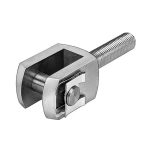
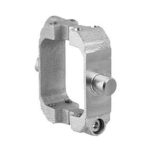
Pivoting mounts are mandatory as soon as the cylinder swings a lever or flap around a pivot. The clevis mount with a pin allows motion in one plane and is simple and robust. The trunnion sits on the side of the barrel and carries the load centrally, good for long cylinders but sensitive to bending. Both ends should pivot so the rod sees no side load.
Unsure about pivot point and bearing span? We size it with you.
- Protect clevis and trunnion eyes with a plain or spherical bearing against edge loading.
- Place the trunnion as close as possible to the load centre of gravity.
- On long strokes check the buckling load (Euler) with a safety factor of 1.5 to 2.
How do I choose bore, stroke and buckling safety?
After the mounting style comes the size. Bore follows from force and working pressure, stroke from the travel needed. Buckling load matters most: a long, slender cylinder under pressure buckles like a column. The mounting style changes the free buckling length, and a clevis at both ends is more critical than a fixed clamp. Choose a safety factor of 1.5 to 2 against buckling.
Frequently asked questions
When should I use a fixed versus a pivoting cylinder mount?
If the load point moves in a straight line, a fixed mount such as flange or foot fits. If the load rotates around a point, you need a pivoting mount such as clevis or trunnion at both ends so no side load acts on the piston rod.
What is the difference between a clevis and a trunnion?
The clevis is a pin joint at the cap or head and pivots in one plane. The trunnion sits on the side of the barrel and supports the load centrally. The trunnion suits long cylinders but reacts more sensitively to bending.
Why does my cylinder buckle when fully extended?
On a long stroke the cylinder acts like a compression column and can buckle sideways. The mounting sets the free buckling length. Check the buckling load per Euler with a safety factor of 1.5 to 2, or choose a larger rod.
Find the right cylinder mount
Find cylinders by mounting style, bore and buckling safety for your application in our shop.
Practical selection
Recommendations by force direction, movement and buckling load.
Correct force path
Fixed or pivoting mount clearly assigned.
Safe sizing
Buckling load and alignment clearly explained.
Selection help
We help you choose the right products; technical details are clarified with the manufacturer.