
Sizing Compressed Air Pipework
Well-sized air pipework holds stable pressure at the last consumer and saves energy for the life of the system. If the bore is too small, pressure drop builds up, the compressor runs longer and running costs climb. This guide walks through combining flow rate, pipe length and allowable pressure drop into the correct pipe size step by step.
To the guidesWhich factors decide the pipe size?
Four factors drive the sizing: the total flow rate of all consumers, the pipe length including fittings, the allowable pressure drop and the working pressure. The inner diameter follows so that air flows at around 6 m/s in the main line. Too high a velocity creates friction and pressure drop, too low a velocity wastes expensive pipe material.
Which bore matches my air demand?
The bore follows from flow rate and pipe length at a given pressure drop. The values below serve as a guide for a 50 m line at 8 bar with a pressure drop below 0.1 bar. For longer runs or reserve for later expansion, choose one size larger, because an undersized pipe can only be corrected at high cost later.
- Add up the air demand of all consumers and apply a simultaneity factor.
- Plan a reserve of 25 to 30 % for future expansion.
- Above 50 m of pipe length, step up one nominal size.
- Never fit connections or couplings narrower than the pipe.
Plan material, ring main and condensate correctly
The material sets corrosion protection, pressure drop and assembly effort. Galvanised steel is robust but can rust internally and carry rust into the air. Aluminium and stainless steel stay smooth and corrosion-free, while plastic is light and quick to fit. A ring main feeds each consumer from two directions and so halves the pressure drop compared with a dead-end branch.
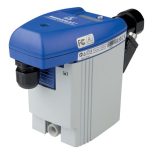
Aluminium and stainless stay smooth, galvanised steel can rust.
Frequently asked questions
How large may the pressure drop in the pipework be?
As a guide the pressure drop from compressor to consumer should stay below 0.1 bar. Every extra tenth of a bar of loss means higher compressor pressure and roughly 6 to 7 % more energy cost.
Ring main or dead-end branch - which is better?
A ring main feeds each consumer from two directions and halves the pressure drop at the same pipe diameter. For larger networks and changing loads it is a clear advantage, while a dead-end branch only suffices for small single take-offs.
Why choose one size larger than calculated?
One step of reserve absorbs later expansion, fouling and friction in fittings. A slightly larger pipe costs little more to install but saves energy for the long term and avoids expensive retrofitting.
Lay out your air network the right way
Our guide covers bore, material and network layout for a stable, energy-saving compressed-air system.
Vetted sizing
Recommendations from accepted field values and guide figures.
Correct nominal bore
Pipe size matched to flow rate and pipe length.
Low pressure drop
Network layout and diameter designed for stable pressure.
Selection help
We help you choose the right products; technical details are clarified with the manufacturer.