
Air Line Lubricator: When Do You Need It?
An air line lubricator adds a fine oil mist to compressed air to lubricate moving parts in tools and older valves. Today many components are lifetime-lubricated and tolerate no extra oil. This guide shows when a lubricator is truly needed, when it actually causes harm and how to pick the right oil type and dosing.
View air preparation unitsWhat does an air line lubricator actually do?
A lubricator sits in the air preparation unit after the filter and regulator and enriches the compressed air with a fine oil mist. This mist settles as a lubricating film on pistons, seals and spools, cutting friction and wear at high cycle rates. It is vital that the air is clean and dry first - oil on dirt and water turns into grinding paste. That is why the order is filter, regulator, lubricator.
When do you need lubrication - and when does it harm?
Lubrication is needed for air tools such as impact wrenches and chisels, for older cylinders and valves without permanent lubrication and at very high cycle rates. Do not oil lifetime-lubricated valves and cylinders, oil-free applications like food or spray painting, and most modern proportional valves. Once you start oiling you must keep oiling, because the mist washes out the factory grease.
- Oil: air tools, impact wrenches, legacy cylinders without permanent lube.
- Do not oil: lifetime-lubricated valves, proportional and micro valves.
- Never oil: oil-free processes such as painting, food, cleanroom, breathing air.
- Rule: oiled once, oiled always - the mist flushes out the factory grease.
Which oil, which dose, which design?
Use a dedicated pneumatic oil with low viscosity around ISO VG 32, not motor oil and not hydraulic oil. Keep dosing lean: one to two drops per 300 to 600 litres of air is usually enough. Mist lubricators carry a fine mist to distant consumers, while micro-fog lubricators meter even finer. Oil traces at the tool exhaust mean overdosing.
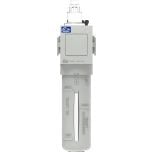
Pick a mist or micro-fog lubricator by run length and consumer.
Frequently asked questions
Do modern pneumatic valves still need a lubricator?
Usually not. Most current valves and cylinders are lifetime-lubricated and run on clean, dry air without a lubricator. A lubricator can even wash out the factory grease. Check the datasheet before adding oil.
Which oil belongs in an air line lubricator?
A dedicated pneumatic oil with low viscosity around ISO VG 32, resin-free and ageing-resistant. Do not use motor oil or hydraulic oil, as these are too thick, form resin and can attack seals.
How do I know I am oiling too much?
Visible oil drops at the tool exhaust, oily deposits in the line and oil stains nearby point to overdosing. Reduce to one or two drops per 300 to 600 litres of air and watch the tool.
Find the right air preparation unit
We supply air preparation units with filter, regulator and lubricator - suited whether or not your application needs lubrication.
Practical selection
Recommendations from maker data and field experience.
Correct dosing
Oil type and drop count clearly explained.
Avoid mistakes
When lubrication harms and where it is off limits.
Selection help
We help you choose the right products; technical details are clarified with the manufacturer.